Growth · · 7 min read
The Solo Developer’s Playbook: Building Systems That Run Themselves
How one solo developer manages an arbitrage bot, WordPress sites, and a personal brand simultaneously—by designing systems that require no constant presence.
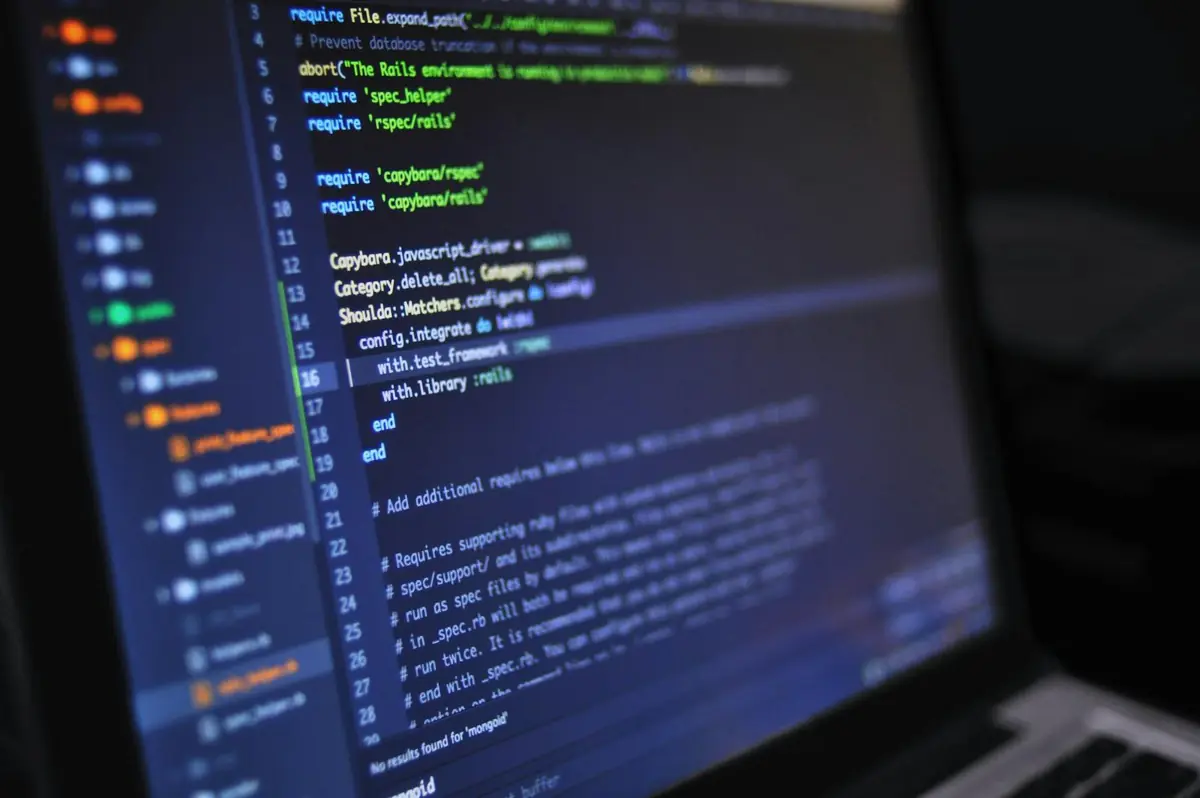
The Solo Developer in 2026: One Person, Multiple Systems
In 2026, the identity of the indie developer is no longer niche. According to the latest global freelance market reports, there are over 42 million active independent tech creators worldwide, a significant portion of whom maintain three or more automated systems or digital products simultaneously. The proliferation of AI tools has dramatically raised the ceiling of what a one-person company can achieve—but it has also introduced a new challenge: as your systems multiply, your attention remains fixed at 24 hours a day. How do you avoid being buried under the weight of your own creations?
This article draws from the real-world practices of an indie developer who simultaneously runs a Polymarket arbitrage bot, WordPress sites for multiple clients, and his own personal brand website. The methodology he has developed—making systems care for themselves—carries a unique philosophical weight even in 2026, when automation tooling is more abundant than ever. Because tools have never been the bottleneck. Mindset is.
The First Line of Defense: Automated Monitoring and Telegram Alerts
Most developers discover system problems reactively—a client reports an issue, or they happen to open the dashboard and notice something is wrong. This passive model is barely tolerable when managing a single system, but once you’re juggling three or more, it almost inevitably leads to production incidents.
His solution: connect every system to Telegram notifications, so that anomalies come to him rather than him going to find them. In 2026, Telegram remains one of the most popular real-time notification channels in the indie developer community—for good reason. It has a robust Bot API, cross-platform support, and is completely free. Whenever the arbitrage bot detects abnormal price spreads, a WordPress site goes down, or a log emits a critical error keyword, a formatted alert is automatically pushed to his phone.
The core philosophy here is that attention should be invoked on demand, not continuously consumed. Many developers habitually open dashboards every few hours to ‘check if anything is wrong’—this behavior is essentially low-efficiency polling. A push-based notification model allows you to genuinely step away from work and return only when the system actually needs you.
The Second Line of Defense: systemd Service Management and Auto-Restart
Long-running processes are one of the most common pain points for solo developers. Arbitrage bots, scrapers, API servers—these processes can crash for countless reasons: memory leaks, network timeouts, third-party API failures. Without an auto-restart mechanism, a 3 AM crash might not be discovered and handled until you wake up in the morning.
systemd is one of the most mature service management tools in the Linux ecosystem. By configuring all long-running processes as systemd services, you gain automatic restart on crash (`Restart=always`) and automatic loading on system boot. This approach remains the industry standard in 2026—whether you’re running a VPS, cloud VM, or bare-metal server, systemd is one of the most reliable choices available.
It’s worth noting that systemd’s power goes far beyond restarts. Its `journalctl` logging system allows you to query logs from all services in a unified way. Its dependency management lets you define startup ordering between services. Its resource limiting capabilities (via cgroups integration) prevent a runaway process from consuming all CPU or memory. Taken together, these features make systemd an ideal infrastructure layer for one person managing multiple services.
The Third Line of Defense: Structured Logging and Auto-Cleanup Strategy
Logs are the black box of system health and the most important source of clues when troubleshooting. But logs themselves need to be managed, or they become the source of another problem—disk overflow. This developer’s strategy runs on two parallel tracks: structured logging ensures readability and queryability, while an auto-cleanup strategy keeps disk usage safe.
The core of structured logging is recording each log entry in JSON or a similar format rather than plain text strings. This allows logs to be parsed, filtered, and aggregated programmatically rather than searched by the human eye. In 2026, structured logging is standard practice for any serious system—paired with tools like Loki, Elasticsearch, or even the simple `jq` command-line tool, the full value of your logs can be extracted.
The auto-cleanup strategy is typically implemented via logrotate or custom scripts: when a log file exceeds a configured size threshold (e.g., 50MB or 100MB), the system automatically compresses or clears old logs. This seemingly simple design prevents the maddening scenario where a system is running perfectly but suddenly crashes one day because the disk is full. In the context of one person managing multiple systems, the importance of this kind of defensive design cannot be overstated.
The Most Critical Mindset Shift: Distinguishing What Needs Human Judgment from What Can Be Automated
Technical tools are merely means to an end. The real core is a shift in mindset. The most important insight this developer shares is not a specific tech stack, but a decision framework: every time you do something repetitively more than twice, you should ask yourself—can this be automated?
“Never handle manually what automation can do. Reserve human energy exclusively for what genuinely requires judgment.”
In 2026, with the maturation of AI agent technology, the boundary of ‘what can be automated’ has expanded dramatically. Tasks that once required human judgment—such as analyzing abnormal logs and suggesting fixes, or adjusting arbitrage strategy parameters based on market conditions—can now be handled by AI agents for initial triage, with humans making only the final call. This is not to say human decision-making is unimportant—rather, the ‘trigger threshold’ for human intervention should be raised. Only edge cases where AI cannot confidently act should escalate to human involvement.
- Requires human judgment: major strategic pivots, sensitive client communications, legal compliance decisions
- Can be automated: routine health checks, standardized report generation, repetitive data backups, auto-remediation of known errors
- AI-assisted triage, human final decision: anomaly pattern identification and classification, strategy parameter adjustment recommendations, cross-system anomaly correlation diagnosis
From Technical Systems to Personal Productivity: The Transfer of Design Thinking
The most fascinating aspect of this methodology is what it reveals about personal productivity management. When you’ve internalized the habit of designing self-maintaining mechanisms for your technical systems, you naturally begin applying the same lens to your daily life and work routines. Does your calendar have an ‘auto-filter mechanism’ that prevents unimportant meetings from entering your time? Do your email rules automatically archive low-priority messages without consuming your attention?
This mindset is especially critical in 2026. Information overload and attention fragmentation have become the greatest productivity killers for modern knowledge workers. According to multiple workplace productivity studies, a typical knowledge worker is interrupted more than 60 times per day on average, and each recovery of focused attention takes an average of 23 minutes. The real heart of ‘making systems care for themselves’ is protecting your most precious resource: **deep, focused attention**.
“The key to one person maintaining multiple systems is not energy—it’s design. Design a system that doesn’t require your constant presence.”
Extended Thinking for 2026: AI Agents and the New Frontier of Self-Managing Systems
Viewed from the vantage point of 2026, this methodology can be upgraded even further. The maturation of AI agents has opened new possibilities for self-managing systems: not just the automatic execution of preset rules, but context-aware intelligent decision-making. For example, an AI agent that autonomously monitors arbitrage bot performance, analyzes market condition changes, and automatically adjusts strategy parameters when necessary is no longer science fiction—it is an engineering practice that can be implemented in 2026.
But there is an important warning here: introducing AI agents does not mean human oversight can be abandoned. On the contrary, as system complexity increases, the demands on oversight design increase proportionally. You need to design ‘oversight mechanisms for your AI agents’ just as you designed ‘monitoring and alerting for your manual systems.’ This is a recursive problem: the mechanisms used to supervise AI themselves need to be designed with sufficient reliability.
Conclusion: Design Your Own Absence
The proposition of ‘making systems care for themselves’ appears on the surface to be a technical problem, but at a deeper level, it is a philosophical question about **how to design your own absence**. A truly excellent system should be able to operate normally when you are not present. A truly excellent personal productivity system should also be able to maintain stable operation without your active maintenance.
In 2026, technical tools are more powerful, more affordable, and more accessible than at any previous point in history. The bottleneck has never been a lack of tools—it has always been an absence of design thinking. Starting today, whenever you face a repetitive task or system maintenance burden, ask yourself first: ‘If I disappeared for three days, what would happen to this system?’ Your goal should be to ensure the answer is always: ‘It would keep running normally, and notify me when it needs me.’
本文基於獨立開發者的實踐分享整理撰寫,結合2026年自動化工具與AI Agent技術發展現狀進行延伸分析。
延伸閱讀
Posts brought over from the old site, written in March–April 2026 and kept as they were.