Life in Japan · · 2 min read
The Convenience Store Philosophy: How Osaka’s Konbini Taught Me to Live with Just Enough
Living in Osaka, the konbini is far more than a shop — it’s a lens into Japan’s urban logic, and the first real doorway into local life for any foreigner.
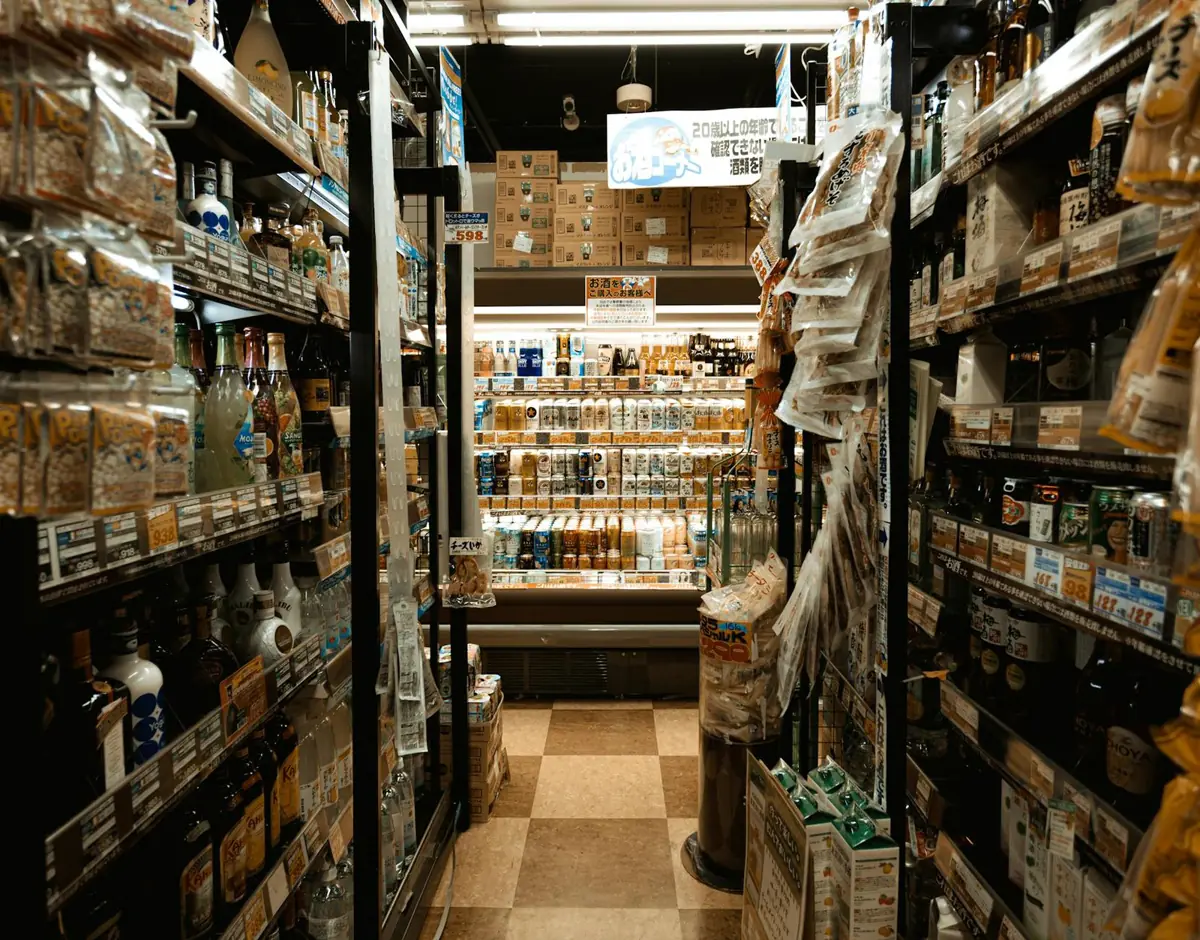
At 7 AM, the Konbini Is Already the Whole World
During my time living in Osaka, I passed the same FamilyMart every morning. Before 7 AM, salarymen in dark suits were already lining up, grabbing hot coffee and onigiri with the practiced ease of a daily ritual. In 2026, Japan’s three major convenience store chains — 7-Eleven, FamilyMart, and Lawson — operate over 57,000 locations nationwide, roughly one store per 2,200 people. That density isn’t accidental. It reflects a deliberate urban design philosophy: make ‘just enough’ always within reach.
Sufficiency as a Cultural Stance
Every product in a konbini is sized for exactly what you need — single-serve salads, 100ml soy sauce, two-slice bread packs. This mirrors Japan’s cultural obsession with ‘tekisetsu’ — appropriateness, neither too much nor too little. It’s both an aesthetic and an ethic. That logic slowly reshaped how I live. I stopped stockpiling. My apartment held only what I’d actually use. No oversized fridge, no snack hoarding — whatever I wanted was a few steps away, fresh that day. In Japan, minimalism isn’t a lifestyle trend you opt into. The konbini just quietly makes it your default.
The konbini isn’t a place that makes you buy more. It’s a place that makes you need to buy less.
The Best Japanese Classroom Has a Slurpee Machine
As a foreigner, the Japanese I picked up in konbinis was more practical than anything from a textbook. The scripted greetings — ‘irasshaimase,’ ‘fukuro wa goriyou desu ka,’ ‘reshiito wa yoroshii desu ka’ — repeated daily until they became instinct. Product labels, ingredient lists, heating instructions: all dense, real-world reading practice. By 2026, with annual visitors to Japan surpassing 40 million, major chains have accelerated multilingual interfaces and AI voice guidance. But the immersive experience of learning a language in actual context — that’s something no app can replicate.
The Neighborhood Anchor: Finding ‘Your’ Konbini
There’s an underrated function of the konbini: it’s the fastest way to find your footing in an unfamiliar city. In Osaka, the moment I started recognizing the night-shift staff at my FamilyMart, knew when the fresh onigiri restock happened, and started paying my utility bills there — I realized I’d stopped being a visitor. Finding ‘your’ konbini is the real marker of settling in. That sense of belonging doesn’t come from fluency or full cultural assimilation. It comes from one fixed, familiar node in your daily routine. In the high-mobility urban life of 2026, the konbini is exactly that — a low-barrier anchor to community.
- Japan’s top 3 konbini chains exceed 57,000 locations in 2026, the highest coverage density globally
- Single-serve product sizing naturally supports a low-stockpile, minimalist lifestyle
- Repetitive language contexts — greetings, checkout, labels — make konbinis one of the most effective immersion environments for learning Japanese
- Finding ‘your’ konbini is a low-barrier starting point for foreigners to build a sense of belonging in Japanese cities
門市數據參考自2026年日本フランチャイズチェーン協会(JFA)年度統計報告;訪日外客數據參考自日本観光庁2026年第一季度公告。
Posts brought over from the old site, written in March–April 2026 and kept as they were.